
info@skybots.in
+91 8754531574
Location
| Your Path to Becoming a Certified Drone Pilot Starts Here | 4.00 |
| Course Intro & Instructor | 4.51 |
| Who is This Course For? | 4.47 |
| Curriculum Overview | 4.16 |
| UAV Study Material | 2.39 |
| How To Study For This Course | 2.19 |
| What To Expect From The Exam | 8.41 |
| UAV Campus Test Prep App | 0.56 |
| How to access your digital study material on UAV Campus | 17.27 |
| Where to Find Tools, Copters and Other Products We Talk About | 3.31 |
| UAV loading and Performance overview | 1.58 |
| Loading and Performance Exam Prep | 3.58 |
| Responsibilities of rPIC | 5.48 |
| Axes of Rotation | 8.08 |
| Fixed wing Aircraft Roll,Pitch and Yaw | 2.56 |
| FIELD TRIP! Fixed Wing Axes of Rotation | 7.37 |
| FIELD TRIP! Quadcopter Axes of Rotation | 8.31 |
| FIELD TRIP! Fixed Wing VTOL | 5.23 |
| Four Forces of Flight | 3.34 |
| Lift | 2.01 |
| Principles of Lift | 1.54 |
| Newton/Bernoulli | 8.47 |
| Weight | 4.12 |
| FEILD TRIP! Maximum Allowable Weight | 2.20 |
| Thrust Fixed Wing | 3.19 |
| Thrust Rotorcraft/Quadcopter | 2.29 |
| Parasite Drag | 4.16 |
| Induced Drag | 1.30 |
| FIELD TRIP! Induced Drag Example | 3.37 |
| Stalls | 6.00 |
| Load Factor | 2.31 |
| Load Factor and Stall Speed | 8.41 |
| Stability | 4.17 |
| Center of Gravity (CG) & Factors Affecting Performance | 4.25 |
| Moving CG Location | 5.18 |
| Effects of CG and Moving It | 10.47 |
| Exceeding CG Limits | 3.29 |
| Altitude Affecting Performance | 2.20 |
| Temperature & Humidity Affecting Performance | 1.29 |
| Weight Affecting Performance | 1.42 |
| Other Factors Affecting Performance | 3.07 |
|
| FAA Regulation Overview | |
| Regulation Exam Prep | |
| Introduction to FAA Regulation | |
| Regulation Subparts | |
| Subpart A: 107.1 - Applicability | |
| Can Recreational Flyers Still Be Paid? | |
| 107.3 - Definitions | |
| FIELD TRIP! Unmanned VS Manned Quadcopters | |
| 107.5 - Falsification, Reproduction, Alteration | |
| 107.7 - Inspection, Testing, & Compliance | |
| 107.9 - Accident Reporting | |
| |
| Subpart B: 107.12 Requirements for Remote Pilot Certificate | |
| 107.13 to 107.15 - Registration | |
| 107.17 - Medical Conditions | |
| 107.19 to 107.21 - rPIC Emergencies | |
| 107.23 to 107.25 - Hazardous Operations and Moving Vehicles | |
| FIELD TRIP! FPV From a Moving Car | |
| FIELD TRIP! FPV From a Boat | |
| 107.27 and 107.59 - Alcohol & Drugs | |
| |
| 107.29 - Night Operation | |
| 107.31 - Visual Line of Sight (VLOS) | |
| 107.33 to 107.36 - Visual Observer, Multiple Drones, Hazardous Materials | |
| 107.37 to 107.39 - Right of Way, Operation Over People (OOP) | |
| 107.41 to 107.43 - Airspace and Airport Operations | |
| 107.49 - Preflight Familiarization | |
| 107.51 - Operating Limitations Part 1, 400ft | |
| 107.51 - Operating Limitations Part 2, Clouds & Speed | |
| Automated Operations | |
| Subpart C: 107.61 to 107.77 - Eligibility, Recency, Retesting, Change of Address | |
| |
| Subpart D: Operations Over People (OOP) | |
| Category 1 UAS | |
| Category 2 UAS | |
| Category 3 UAS | |
| Category 4 UAS | |
| FAA Declaration of Compliance & EXTRA VIDEO! | |
| FIELD TRIP VIDEO! Indoor and Outdoor Flying with Cinewhoop Drones | |
| Moving Rotating Parts | |
| "Closed/Restricted" and "On Notice" | |
| Operations Over People at Night & Minimum Distance | |
| 107.145 - Flying over Moving Vehicles | |
| FIELD TRIP! Flying Over Racecars at a Race Track | |
| New OOP Waivers | |
| |
| Subpart E: 107.205 - Waivable Regulation | |
| Part 48 - Registration | |
| Part 89 - What is Remote ID? | |
| Who Must Comply With Remote ID? | |
| Remote ID Methods 1 & 2 | |
| Operational Requirements & Remote ID Method 3 | |
| Registration Requirements | |
| NTSB Requirements: 49 CFR Part 830 | |
| NTSB Reporting | |
| Filing a NASA Report | |
|
| Airport Operations Overview | 2.42 |
| Exam Prep For Airport Operations | 0.34 |
| Types of Airports | 6.31 |
| True vs Magnetic North | 3.53 |
| Runway Orientation | 2.59 |
| Traffic Patterns | 3.41 |
| Segmented Circle | 4.58 |
| Wind Direction Indicators | 3.02 |
| Airport Signs | 8.07 |
| Airport Beacons | 1.21 |
| FIELD TRIP! Civil Airport Beacon | 1.08 |
| FIELD TRIP! Military Airport Beacon | 1.05 |
| |
| Operation Near & At Airports | 2.22 |
| Flying the Wire Environment | 2.22 |
| FIELD TRIP! Flying the Wire Example | 3.57 |
| Other Operational Considerations | 2.28 |
| Sources of Airport Data | 4.00 |
| How to Use Chart Supplements (Part 1) | 2.46 |
| How to Use Chart Supplements (Part 2) | 5.45 |
| NOTAMs | 4.32 |
| Types of NOTAMs | 4.45 |
| FEILD TRIP! Following Aircraft at Private Airport | 2.07 |
| ATIS | 6.41 |
| 3.49 |
| Aviation Radio Communications Overview | 9.10 |
| Radio Communications Exam Prep | 1.21 |
| Alphabet & Numbers | 8.48 |
| Traffic Location & Call Sign | 5.56 |
| Nontowered Airports - Position Reports | 3.14 |
| Nontowered Airports - CTAF & UNICOM | 4.44 |
| Best Practices | 0.40 |
| FIELD TRIP! Listening to Radios | 23.20 |
| Towered Airports | 1.16 |
| Who Do You Listen To? | 2.23 |
|
| Understanding Airspace Overview | 2.28 |
| Exam Prep for Airspace | 0.48 |
| General Airspace Information | 2.01 |
| Types of Airspace | 1.33 |
| Defining Airspace Terms | 15.31 |
| Controlled Airspace Overview | 9.32 |
| Class A & B - Definitions | 10.01 |
| Class B - Skyvector Charts | 4.45 |
| Class C - Definitions | 2.13 |
| Mode C Veil | 3.58 |
| Class C - Skyvector Charts | 2.16 |
| Class D - Definitions | 7.31 |
| Class D - Skyvector Charts | 10.19 |
| Class E - Definitions | 9.13 |
| Class E Extensions | 2.38 |
| Class E - Skyvector | 3.14 |
| Class G | 1.56 |
| |
| How to Determine if You Need Approval | 8.59 |
| Special Use Airspace: Prohibited and Restricted Areas | 5.52 |
| Warning, Military Operation, Alert & Controlled Firing Areas | 7.44 |
| Other Airspace: Temporary Flight Restrictions | 6.01 |
| Parachute Jump Areas | 0.27 |
| Military Routes & Special Military Activity | 4.09 |
| MTRs on Skyvector | 4.35 |
| VFR Routes | 2.53 |
| NSA, FRZ, ADIZ | 3.09 |
| FRZ and ADIZ on Skyvector | 1.58 |
| Special Flight Rules Area | 1.30 |
| Wilderness Areas, National Parks & Tethered Balloons | 3.04 |
|
| Understanding Charts Overview | 1.34 |
| Exam Prep for Charts | 1.05 |
| Types of Charts | 7.07 |
| Sectional Charts | 10.51 |
| Skyvector Sectional Charts | 6.27 |
| Maximum Elevation Figure (MEF) | 5.21 |
| Airport Depictions | 12.43 |
| Navigation Aid | 2.31 |
| Isogonic Lines and Chart Variation | 1.46 |
| Victor Airways | 3.37 |
| Obstructions | 7.27 |
| Miscellaneous Symbols | 7.04 |
| |
| Latitude & Longitude | 4.44 |
| How to Read GPS Coordinates | 12.39 |
|
| Aviation Weather Overview | 1.21 |
| Exam Prep for Aviation Weather | 2.21 |
| Atmospheric Circulation | 4.57 |
| Atmospheric Pressure | 6.29 |
| Standard Day Plus High and Low Pressures | 6.18 |
| Pressure Altitude Calculation | 3.00 |
| Density Altitude | 4.30 |
| FIELD TRIP! Density Altitude Plane Crash | 7.36 |
| Density Altitude Graph | 5.54 |
| High Pressure, Low Density Altitude | 0.44 |
| UAV Performance | 10.52 |
| |
| Wind and Pressure | 4.31 |
| Isobar Pressure Example | 6.53 |
| Convective Currents and Turbulences | 22.56 |
| Circulation Patterns: Land and Sea Breezes | 5.24 |
| Low-Level Wind Shear | 5.18 |
| FIELD TRIP! Low Level Wind Shear | 2.33 |
| Temperature and Dew Point | 3.31 |
| Frost Facts | 1.39 |
| Types of Fog | 5.59 |
| Cloud Types | 6.01 |
| |
| Ceiling and Visibility | 5.12 |
| Stability of Air Masses | 11.41 |
| Thunderstorms | 5.19 |
| Fronts | 5.15 |
| Structural Icing | 3.12 |
|
| Chapter Overview | 1:23 |
| Exam Prep for Aviation Weather Services | 1:55 |
| Understanding Weather Information | 2:03 |
| Introduction to METARs | 8:55 |
| How to Read METARs | 1:59 |
| Hot to Read METARs Part 2 | 9:24 |
| EXTRA VIDEO! Additional METARs | 7:37 |
| EXTRA VIDEO! METAR Decoding | 6:51 |
| METAR Code List | 9:18 |
| Online METAR Decoder | 4:05 |
| Clouds Defined in METARs | 14:11 |
| 2:31 |
| Decoding TAFs | 12:26 |
|
| Chapter Overview | 1:23 |
| Exam Prep for Aviation Weather Services | 1:55 |
| Understanding Weather Information | 2:03 |
| Introduction to METARs | 8:55 |
| How to Read METARs | 1:59 |
| Hot to Read METARs Part 2 | 9:24 |
| EXTRA VIDEO! Additional METARs | 7:37 |
| EXTRA VIDEO! METAR Decoding | 6:51 |
| METAR Code List | 9:18 |
| Online METAR Decoder | 4:05 |
| Clouds Defined in METARs | 14:11 |
| 2:31 |
| Decoding TAFs | 12:26 |
|
| Aeronautical Decision Making Overview | 1:36 |
| Exam Prep for Aeronautical Decision Making | 1:58 |
| ADM History and Why We Use It | 4:57 |
| Decision Making Steps | 3:45 |
| Crew Resource Management | 3:25 |
| Single Pilot Resource Management | 9:09 |
| Hazard & Risk | 3:19 |
| Hazardous Attitudes | 17:13 |
| Risk Assessment and Mitigation | 8:09 |
| Risk Management Process | 3:26 |
| Risk Fundamentals and The PAVE Checklist | 5:34 |
| Decision Making Process | 3:42 |
| DECIDE Model and Automatic Decision Making | 5:39 |
| Operation Pitfalls | 10:48 |
| Stress Management | 4:07 |
| Situational Awareness | 3:14 |
| Common Accident Factors | 11:22 |
|
| Physiological Factors Overview | 1:06 |
| Exam Prep for Physiological Factors | 2:07 |
| Introduction to Physiological Factors | 1:26 |
| Hyperventilation | 1:44 |
| Stress & Fatigue | 5:24 |
| Dehydration & Heat Stroke | 3:39 |
| Drugs & Alcohol | 2:34 |
| Vision and Flight Scanning | 3:27 |
|
| Night Operations Introduction | 0:39 |
| Exam Prep for Night Operations | 2:08 |
| Night Regulation | 1:44 |
| Requirements For Flying at Night | 2:09 |
| Vision in Flight | 8:19 |
| Dark Adaptation | 7:45 |
| Coping With Stress at Night | 2:01 |
| Illusions at Night | 10:07 |
| Flicker Vertigo | 0:35 |
| Tips For Flying at Night Part 1 | 3:32 |
| Tips For Flying at Night Part 2 | 11:11 |
| Losing Visual Line of Sight at Night (VLOS) | 3:37 |
| Airspace Approval at Night | 7:36 |
|
| Maintenance and Inspections Overview | 0:50 |
| Exam Prep for Maintenance and Inspections | 1:58 |
| The Importance of Maintenance | 2:42 |
| Preflight Inspections | 7:08 |
| Emergency Planning | 1:14 |
| Lithium Battery Fires | 3:55 |
| Safe Handling of Lithium Batteries | 19:13 |
| The Frequency Spectrum | 11:09 |
| Loss of Control Link & Flyaways | 5:24 |
|
| How to Start Applying For Your FAA Exam | 2:00 |
| How to Get Your FTN Number on IACRA | 3:59 |
| How to Sign Up for PSI and Schedule | 11:15 |
| What Should I Bring to The Exam? | 9:44 |
Welcome to the FAA Part 107 Simplified | UAV Campus Drone License Course! This comprehensive training program is designed to prepare you thoroughly for the FAA Part 107 exam and equip you with the knowledge and skills necessary to become a certified drone pilot. Whether you are a beginner or an experienced drone operator looking to formalize your expertise, this course covers all the essential topics required for certification and beyond.
What You'll Learn:
Loading and Performance: Understand the fundamentals of drone loading, balance, and performance factors that affect flight operations.
14 CFR 107 FAA Regulation: Gain an in-depth understanding of the FAA regulations that govern drone operations, ensuring compliance and safety.
Airport Operations: Learn the intricacies of operating drones in and around airports, including communication protocols and safety measures.
Aviation Radio Communications: Master the art of effective aviation communication, including standard phraseology and procedures.
Airspace: Explore the different classes of airspace, their restrictions, and how to navigate them safely and legally.
Sectional & TAC Charts: Learn to read and interpret sectional and terminal area charts to enhance your situational awareness and planning.
Aviation Weather Theory: Delve into the principles of weather theory, including the formation of various weather phenomena and their impact on drone flight.
Aviation Weather Services: Discover the resources available for obtaining real-time weather information and forecasts to plan safe flight operations.
Aeronautical Decision Making (ADM): Develop critical thinking and decision-making skills that are essential for safe and effective drone operations.
Physiological Factors: Understand how human factors such as fatigue, stress, and health can affect drone operation and how to mitigate these risks.
Night Operations: Understand the specific regulations, safety procedures, and best practices for operating drones at night.
Maintenance & Inspections: Learn the best practices for maintaining and inspecting your drone to ensure it is always in optimal condition for flight.
Practice FAA Exams: Test your knowledge with practice exams that simulate the actual FAA Part 107 test, ensuring you are fully prepared.
How to Apply For Your Remote Pilot Certificate & Stay Current: Step-by-step guidance on the application process for your Remote Pilot Certificate and tips on how to keep your certification up to date.
Our course is designed with simplicity and clarity in mind, breaking down complex topics into easily understandable segments. With a focus on practical knowledge and real-world applications, you will gain the confidence needed to operate drones safely and legally. Additionally, our practice exams and detailed lesson plans will ensure you are well-prepared to ace the FAA Part 107 exam on your first try.
Join us today and take the first step towards becoming a certified drone pilot. Master the skies with our FAA Part 107 Simplified | UAV Campus Drone License Course!

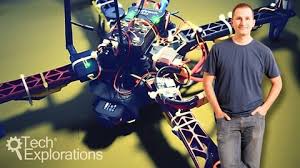
I have been flying manned aircraft since 1996 and flying quadcopters since 2009. I have owned two separate drone service companies since 2010 and have been part of local public safety agencies decision in acquiring and training their teams on drone technology. Flying is not just a passion for me it's my way of life.




Incorrect OTP
Incorrect OTP
Designed and Developed by B2L Mobitech Pvt. Ltd.
Incorrect OTP
Designed and Developed by B2L Mobitech Pvt. Ltd.